Azure Fabric :: Part 6 — Semantic Layer, AI/ML and Optimization
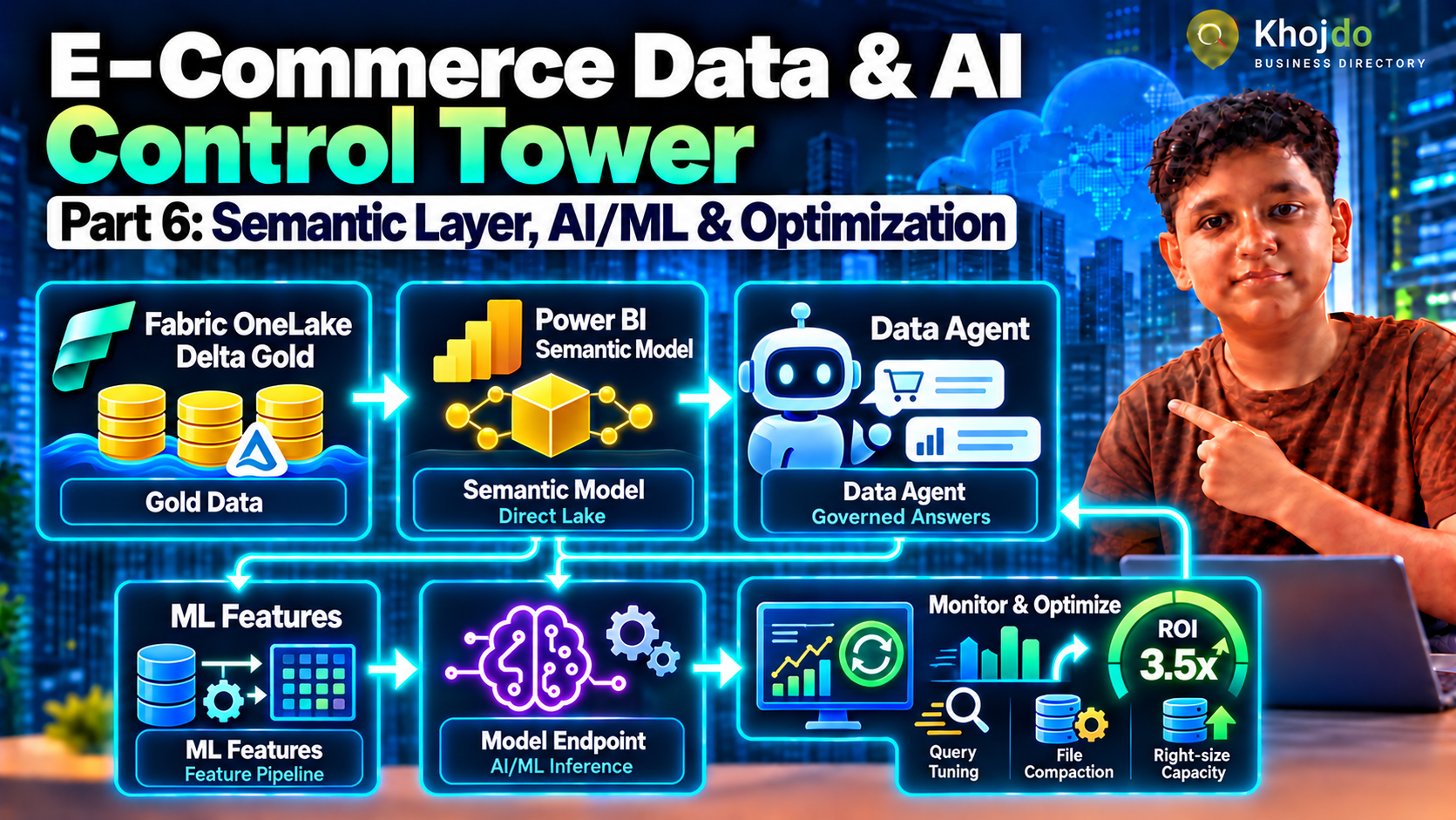
Bring the six-part e-commerce control tower together with governed analytics, AI/ML monitoring, agentic AI ROI, outstanding implementation work and optimization practices.
Series: E-Commerce Data & AI Control Tower — Part 6 of 6
Scenario: An international e-commerce platform operates petabyte-scale batch and streaming data across Microsoft Fabric OneLake and Azure Databricks. This final part adds a governed semantic and AI/ML layer, then closes the series with implementation priorities and optimization practices. Scale, workload and financial values below are examples; validate with representative data and current platform pricing.
How agentic AI can help across Parts 1–6
Use agents to reduce repetitive discovery, triage and explanation work. Keep business definitions, data decisions and consequential production actions under accountable human ownership.
- Part 1 — Architecture and planning: summarize source inventories, data classes, business goals and freshness needs; compare architecture options and draft decision records. Measure time saved in discovery and design reviews.
- Part 2 — Ingestion at scale: correlate CDC lag, API limits, throughput, checkpoint state and retries; recommend targeted replay or source investigation instead of reflexive full reloads. Measure avoided reprocessing and faster recovery.
- Part 3 — Processing, PII and quality: surface schema drift, duplicates, quality failures and possible sensitive fields from approved metadata; prepare quarantine or rule-change proposals for data-owner review. Measure triage time and reduction in repeated defects.
- Part 4 — Operations control tower: combine pipeline, capacity, network and freshness telemetry; produce evidence-linked root-cause hypotheses; route approved, idempotent remediation. Measure diagnosis time, recovery time and SLA outcomes.
- Part 5 — Governance, security and DevOps: summarize access, ownership, lineage and release evidence; flag policy gaps and prepare pull requests or review packets. Measure access-review and release-review effort, with human approval retained.
- Part 6 — Semantic and AI/ML products: answer governed business questions through a semantic model, explain metric definitions, help find relevant certified data products, and summarize model or feature-health alerts. Measure analyst self-service, query efficiency and model operations effort.
Unlock this series to read the rest
This article belongs to a set. One payment opens every part for the period shown.
Already bought it? Sign in with the email you paid with, or open your access link.