Azure Fabric :: Part 1 — Target Architecture : Fabric and Databricks platform for petabyte-scale e-commerce data
Design a privacy-aware Fabric and Databricks platform for petabyte-scale e-commerce data, with observability across ingestion, network, compute, data quality, SLAs and future AI agents.
Part 1: Define the Target Architecture Before Moving the First Petabyte
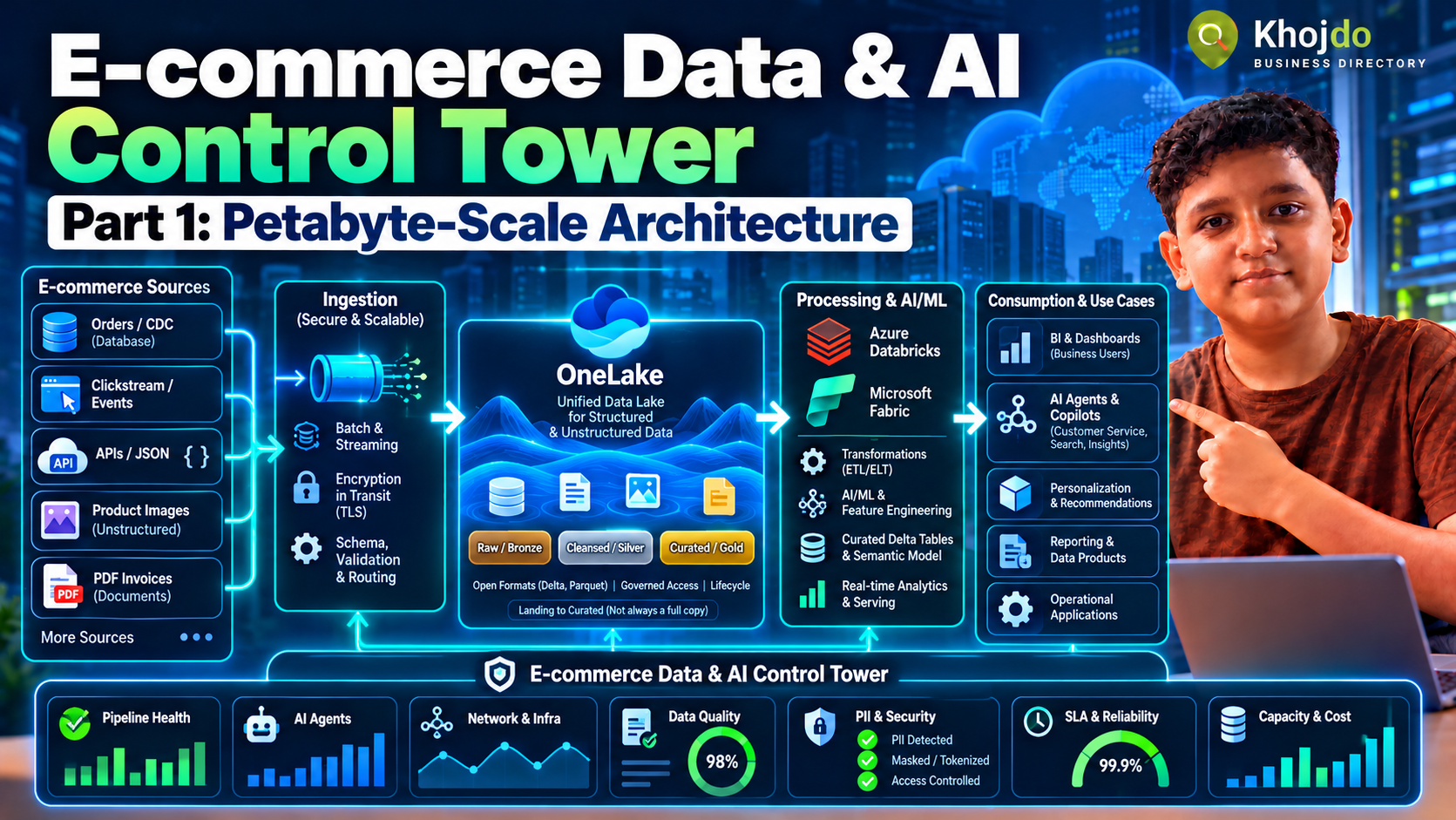
Reference architecture concept: source data flows through governed processing to analytics and operational monitoring. Dashboard numbers shown in the artwork are illustrative only, not proposed SLA targets.A large e-commerce platform does not have one data source or one kind of data. Orders, payments, inventory and customer records may sit in transactional databases; clickstream and fulfillment updates arrive as events; partners expose APIs; and product catalogs include JSON, images, PDFs and other documents. At petabyte scale, the architecture must control data movement, privacy, reliability and compute cost while still giving business and engineering teams a shared view of what is happening.
This six-part series uses a hypothetical multi-region e-commerce business with years of history, continuous transaction growth and multiple analytics and AI use cases. It treats Fabric and Azure Databricks as complementary engines: Fabric provides OneLake, data integration, lakehouse, analytics and reporting experiences; Databricks provides Spark-based data engineering and ML workflows where those capabilities fit. The design does not require copying every source into a single physical location.
Unlock this series to read the rest
This article belongs to a set. One payment opens every part for the period shown.
Already bought it? Sign in with the email you paid with, or open your access link.